
Last updated: November 2026.
Rain in Tokyo does not have to mean a lost day. Many of the city's most memorable experiences happen indoors anyway. This guide covers 14 things to do in Tokyo when it rains. It starts with hands-on cultural experiences run by Alva Japan Tours, then covers well-known indoor spots, and ends with what to expect in Tokyo's rainy season and typhoon season.
When does it rain most in Tokyo?
Tokyo gets rain in every season, but two periods stand out.
Rainy season (tsuyu): Tsuyu is the early-summer rainy season, with many cloudy and wet days in a row. According to the Japan Meteorological Agency (JMA), it starts around June 7 and ends around July 19 in an average year for the Kanto-Koshin region, which includes Tokyo. In 2026, JMA's preliminary dates were around June 7 and around July 20.
Typhoon season: Typhoons are tropical storms that bring strong wind and heavy rain. In an average year, about 3.3 typhoons come close to the Kanto-Koshin region. September has the most approaches (1.2 on average), followed by August (0.8) and October (0.7).
Hands-on cultural experiences you can do indoors
All of these take place inside, and every one listed here allows free cancellation up to 24 hours before the start. Prices are per person, as of November 2026.
Watch and try
Sumo show and workshop in Ryogoku: Ryogoku is Tokyo's sumo district in east Tokyo, home of the national sumo stadium. In this 2-hour experience, former professional sumo wrestlers demonstrate techniques and an exhibition bout a few meters away, inside a restaurant with its own sumo ring. You can learn shiko, the leg-raising stomp, and step into the ring if you want to. A chanko hot-pot lunch is included. Price: ¥13,000 per adult, ¥9,000 per child aged 2 to 5. Rated 4.9 by 509 guests. Read more in our guide to sumo shows in Tokyo.
Slow down
Urasenke tea ceremony in Shinjuku: Urasenke is one of the main schools of the Japanese tea ceremony. This private 1-hour session takes place at a tea-utensil business founded in 1930. You watch a tea preparation, eat a seasonal wagashi (a traditional sweet), and whisk your own bowl of matcha. Price: ¥14,000. Rated 4.8 by 23 guests. See also our tea ceremony guide.
Ancient-script calligraphy in Roppongi: Roppongi is a central Tokyo district known for art museums. The instructor holds a doctorate in calligraphy studies. You learn brush basics, see older forms of kanji, and take home your own piece. Length: 1 hour. Price: ¥10,000 per adult, ¥8,000 per child aged 3 to 11.
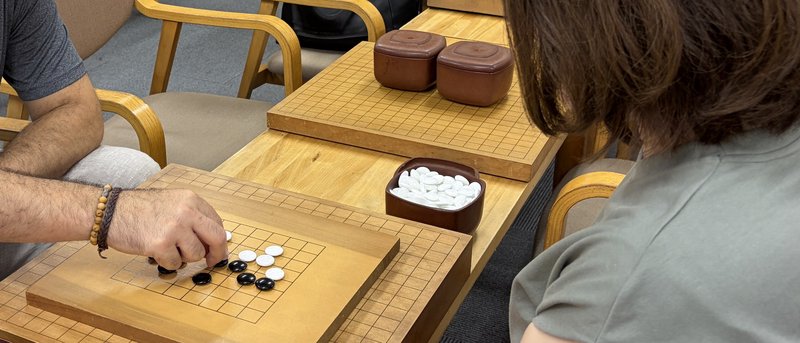
Beginner go lesson in Shinjuku: Go is a strategy board game played with black and white stones. The lesson takes place in a working go salon about a minute's walk from Shinjuku Station exits. Length: 1 hour, including a short guided match. Price: ¥7,000 per adult, ¥6,000 per child aged 4 to 11.
Make something to take home
Chopstick workshop at Shibuya Scramble Square: The workshop is held at Hyozaemon, a chopstick maker with roots going back to 1921, on the 14th floor of a tower directly connected to Shibuya Station. You learn which length suits your hand, practice the grip, and personalize one pair to keep. Length: 1 hour, up to 3 guests. Price: ¥7,500. Rated 5.0 by 38 guests.
Kintsugi jewelry workshop near Shibuya: Kintsugi is the Japanese art of repairing broken ceramics so the cracks show in gold. Here you join pieces of broken ceramics, glass, and sea glass with putty, then add a gold-colored finish to make earrings, a necklace, a ring, or another accessory. Length: about 90 minutes. Price: ¥9,000, including materials for one accessory.
Mini food replica workshop in Kappabashi: Kappabashi is Tokyo's kitchenware street, a short walk from Asakusa. Food replicas are the realistic plastic dishes displayed outside Japanese restaurants. At Sato Sample, founded in 1925, you arrange miniature parts into your own rice bowl. Length: 1 hour. Price: ¥5,500 per adult, ¥4,500 per child aged 9 to 11 (minimum age 9). Note that the bowl and toppings are paid for separately at the shop. Rated 5.0 by 11 guests.
Eat and warm up
Sushi-making class near Asakusa: Asakusa is the historic temple district in northeast Tokyo. This private class is held inside a working sushi restaurant. You shape seven pieces of nigiri, then eat them with tempura, matcha warabi mochi, and one drink. Length: 1 hour 30 minutes, for groups of 4 or more. Price: ¥11,000 per adult, ¥9,000 per child aged 2 to 12.
Local sento experience in Kagurazaka: A sento is a neighborhood public bath. Kagurazaka is a hillside area of narrow lanes in Shinjuku ward. A guide explains the bathing etiquette, then you bathe at Atami-yu, a sento built in 1954 that currently accepts tattoos. Length: 1 hour, with admission, a small towel, and one drink. Price: ¥7,000 per adult, ¥5,500 per child aged 6 to 11. Rated 5.0 by 17 guests.
For more ideas beyond rainy days, see our guide to authentic cultural experiences in Tokyo.
Well-known indoor spots for a rainy day
Tokyo National Museum: This large museum of Japanese art and history stands in Ueno Park in northeast Tokyo. It opens from 9:30 a.m. to 5:00 p.m., and until 8:00 p.m. on Fridays and Saturdays. It is closed on Mondays. The permanent collection costs ¥1,000 for adults and ¥500 for university students, and it is free for visitors under 18.
Depachika food halls: A depachika is the basement food floor of a Japanese department store, packed with bento boxes, sweets, and prepared dishes. Isetan Shinjuku is a well-known example. The store is open from 10:00 a.m. to 8:00 p.m., though hours vary by floor.
Tokyo Station's underground shopping streets: Tokyo Station First Avenue is a shopping area on the station's basement level, outside the ticket gates and reached from the Yaesu gates. It includes Tokyo Character Street, with shops for popular Japanese characters (10:00 a.m. to 8:30 p.m.), and Tokyo Ramen Street (10:30 a.m. to 11:00 p.m., last order 10:30 p.m.). Hours differ by shop.
Sumida Aquarium: This aquarium is inside Tokyo Skytree Town, the complex at the base of Tokyo Skytree. It opens every day of the year, but hours change by date, so check its calendar. Entry closes one hour before closing time. Admission is ¥2,700 for adults, ¥2,000 for high school students, ¥1,400 for elementary and junior high school students, and ¥900 for children aged 3 and over.
Arcades in Akihabara: Akihabara is Tokyo's electronics and anime district. Japanese arcades, called game centers, have crane games, racing games, and rhythm games over several floors. Our Akihabara anime and gaming tour visits a retro-game store, a hobby complex, and an arcade, and includes one Mario Kart race and one gachapon capsule toy. Length: 1 hour 30 minutes. Price: ¥7,000 per adult. Rated 4.8 by 72 guests.
Insider tips for planning a rainy day in Tokyo
Group your stops by area. For example, pair the food replica workshop in Kappabashi with the sushi class near Asakusa and the Tokyo National Museum in Ueno. In Shibuya, combine the chopstick and kintsugi workshops. In Shinjuku, combine the tea ceremony, go lesson, sento, and a depachika.
Book indoor workshops a few days ahead. Online booking closes 24 to 48 hours before the start, and small workshops fill up. Free cancellation gives you room to adjust if the forecast changes.
Typhoon season tips
Check the forecast from official sources. Follow typhoon forecasts on the Japan Meteorological Agency website rather than social media rumors.
Install the Safety tips app. This free app from the Japan Tourism Agency pushes earthquake, tsunami, and weather warnings in 15 languages, including English.
Expect train changes. When a strong typhoon approaches, trains can slow down or stop. Check your rail operator's website before heading out.
Stay close to your hotel. On a storm day, pick an indoor plan nearby and avoid long trips across the city.
Frequently asked questions
When is the rainy season in Tokyo?
In an average year, it runs from around June 7 to around July 19, according to the Japan Meteorological Agency. The exact dates change every year.
When is typhoon season in Tokyo?
Typhoons come closest to the Tokyo region most often in August, September, and October, with September the peak month on average.