
Last updated: November 2026.
A tea ceremony in Tokyo can cost less than ¥2,000 or more than ¥90,000. The difference comes down to the setting, the length, whether it is private, and whether you only drink tea or learn to make it. This guide explains the main types of tea ceremony in Tokyo, what each one costs, and how to choose the one that fits your trip.
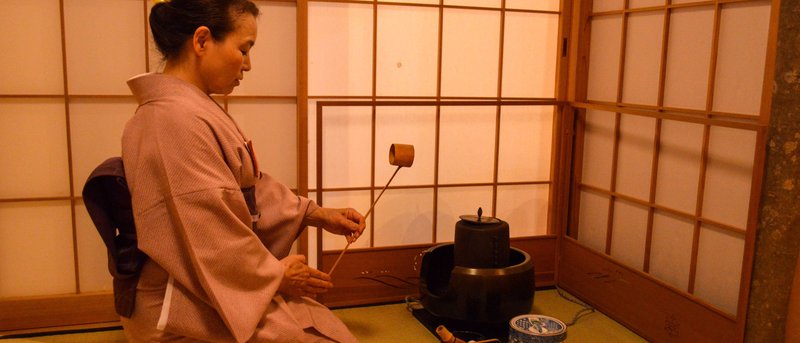
First, a few terms. The Japanese tea ceremony is called chado or sado, "the Way of Tea," a set way of preparing and serving tea to guests. Matcha is powdered green tea whisked with hot water. Wagashi are traditional Japanese sweets, served before the tea to balance its bitterness. Most ceremonies take place on tatami, woven straw mats, and guests traditionally sit in seiza, kneeling with their legs folded underneath.
Tea ceremony prices in Tokyo at a glance
Garden teahouse matcha: Typical price: Under ¥2,000. Length: As long as you like. What you get: A bowl of matcha, usually with a sweet. No ceremony.
Shared tea ceremony studio: Typical price: From about ¥3,500. Length: 20 to 30 minutes. What you get: A short guided ceremony in a small group, matcha and a sweet.
Hotel tearoom: Typical price: ¥3,000 to ¥5,000 per person; private sessions from ¥90,000 per group. Length: 30 to 60 minutes. What you get: A ceremony in a hotel's own tearoom, matcha and a seasonal sweet.
Private English-guided ceremony: Typical price: ¥11,000 to ¥14,000 per person. Length: 1 hour. What you get: Your own session, etiquette explained in English, and you whisk your own bowl.
Zen temple with matcha: Typical price: ¥16,000 per person. Length: 1 hour 30 minutes. What you get: Meditation with a monk, then matcha and a small sweet.
Full-day Zen, tea and calligraphy: Typical price: ¥60,000 per person. Length: 8 hours. What you get: Meditation, a formal tea ceremony with a vegetarian meal, and a calligraphy workshop.
Prices were checked on each venue's official page in November 2026. They change, so confirm before you book.
1. Garden teahouses: matcha without the ceremony
If you simply want to taste matcha in a traditional setting, a garden teahouse is the cheapest option. At Happo-en in Shirokanedai, the Muan tea house serves matcha without a reservation on Fridays to Mondays from 11:00 to 15:00 for ¥1,815 per person. The Tokyo Metropolitan Park Association lists a matcha and sweet service at Hama-rikyu, Rikugien, and Kyu-Iwasaki-tei gardens for ¥510 per seat, plus garden admission. It is a lovely break, but nobody explains the ritual, so it is not really a tea ceremony.
2. Shared tea ceremony studios: short and affordable
Asakusa and Shinjuku have studios that run short ceremonies for visitors throughout the day. At TIA (茶愛 in Japanese), a tea ceremony studio in Asakusa, for example, the tea ceremony experience is ¥3,500 including tax and lasts about 20 to 30 minutes in a small group, with matcha and a Japanese sweet. It suits travelers who are short on time, though half an hour leaves little room for questions.
3. Hotel tearooms: polished, but book early
Several of Tokyo's established hotels have their own tearooms. The Okura Tokyo offers a ceremony of about 60 minutes in which you prepare your own matcha. It costs ¥5,000 per person, including tax and service charge, with a minimum of two people. It runs on Tuesdays, Thursdays, and Saturdays and must be booked at least 7 days ahead. A shorter 30-minute session without tea-making is ¥3,000.
At the top end, Hotel Chinzanso Tokyo offers a private ceremony of about one hour for ¥90,000 for a group of one to three people, including green tea, a Japanese sweet, tax, and service charge. It runs on weekdays from 13:00 to 17:00 and needs at least 10 days' notice. It suits a special occasion or a family group.
4. Private English-guided ceremonies: the most time to learn
A private ceremony costs more per person than a studio, but the whole session is yours, and you can ask as many questions as you like. Alva Japan Tours offers two in Tokyo, both one hour long and both ending with you whisking your own bowl of matcha:
Private Tea Ceremony in Asakusa with Matcha & Wagashi: ¥11,000 per adult (¥9,000 for ages 4 to 11). It takes place in a four-and-a-half-tatami tearoom inside a tea-utensil shop. You purify your hands at a stone basin and enter through the nijiriguchi, a low doorway that makes every guest bow as they come in.
Private Urasenke Tea Ceremony with Matcha & Wagashi in Tokyo: ¥14,000 per person, in Shinjuku. It is held at a tea business founded in 1930 and led by an instructor holding the Jun-Kyoju qualification of Urasenke, one of the main schools of tea. You watch parts of the temae, the host's set sequence for preparing tea, and learn how to act as a guest. It is rated 4.8 from 23 reviews. One guest wrote: "It was such a delightfully authentic experience."
Neither includes kimono rental or hotel pickup. Prices on the tour pages include tax.
5. Zen temple with matcha: tea in its original setting
Tea and Zen Buddhism have long been closely linked in Japan, and some visitors want to experience the two together. Yougakuji, a Rinzai Zen temple founded in 1637 in the Fukagawa area near Monzen-nakacho Station, offers the Private Zen Meditation with a Monk & Matcha in Tokyo. There, a monk teaches you posture and breathing, you sit in zazen (seated meditation), ask questions about Zen, and finish with matcha and a small seasonal sweet. It costs ¥16,000 per person for about 90 minutes, and children aged 0 to 3 are free.
To be clear: this is not a formal tea ceremony. The matcha is a quiet, simple serving after the meditation. Choose it if the temple and the monk are what you are after. It is rated 5.0 from 6 reviews, and one family called it "a big holiday highlight."
If you want both, the Full-Day Zen Meditation, Tea Ceremony & Calligraphy Retreat in Tokyo combines monk-led meditation, a formal tea ceremony with a seasonal shojin (Buddhist vegetarian) meal, and a calligraphy workshop. It costs ¥60,000 per adult for 8 hours with an English-speaking guide, for up to 8 people.
What about wearing a kimono?
Many studios offer a kimono add-on. At TIA in Asakusa, the tea ceremony with an indoor-only kimono is ¥6,000, and with a kimono you can wear outside, plus women's hairstyling, it is ¥9,000. At Hotel Chinzanso Tokyo, kimono dressing starts from ¥22,000 per person. Allow 40 minutes to an hour extra for dressing. Our guide to a tea ceremony in kimono explains how to combine the two.
How to choose: five questions to ask
Do you want to taste tea or understand it? A garden teahouse is enough for a taste. To understand the ritual, choose at least a 1-hour session.
Private or shared? Shared studios are cheaper. Private sessions give you time for questions, which matters if you have children or want photos at a relaxed pace.
Do you whisk your own bowl? Some cheaper or shorter options only serve tea. Check the inclusions.
Can you sit on the floor? Seiza is hard for many people. Tell the venue in advance about knee or back problems and ask whether chairs are possible.
How far ahead can you book? Hotels need 7 to 10 days' notice. Alva Japan Tours' tea experiences can be booked until 24 to 48 hours before the start.
To compare all our options, see tea ceremony experiences in Tokyo.
Frequently asked questions
How much does a tea ceremony cost in Tokyo?
A matcha and sweet at a garden teahouse costs under ¥2,000. A short shared ceremony starts from about ¥3,500, a hotel ceremony costs ¥3,000 to ¥5,000 per person, and a private English-guided ceremony costs ¥11,000 to ¥14,000 per person.
How long is a tea ceremony experience?
Most visitor experiences last 30 minutes to 1 hour. A full formal tea gathering with a meal, called a chaji, takes several hours and is rarely offered to visitors.
Do I have to sit in seiza?
Not always. Seiza means kneeling with your legs folded under you, and many people find it hard after a few minutes. Some venues seat guests at tables: TIA in Asakusa, for example, uses table and chair seating. On Alva's Urasenke session, guests are not required to stay in seiza for the full session. If you have knee or back problems, tell the venue when you book and ask whether chairs are available.
Can children join a tea ceremony?
Yes, at many venues. Our Asakusa ceremony has a child price of ¥9,000 for ages 4 to 11, and children must stay with an adult.