
Last updated: November 2026.
Sitting in a quiet tatami room in kimono with a warm bowl of matcha is easy to arrange in Tokyo, but "tea ceremony in kimono" can mean anything from a short photo session to a lesson in a real tearoom. This guide explains what makes a tea ceremony authentic, what happens step by step, how kimono dressing works, and how to put the two together.
What makes a tea ceremony authentic?
The tea ceremony, called chado or sado, "the way of tea," is a practice in which a host prepares and serves matcha to guests following set ritual movements. Matcha is powdered green tea whisked with hot water into a frothy drink. The Urasenke school, one of the major schools of tea, describes the heart of chado as the host and guest sharing a time and space in which they connect with each other.
So when you compare options, look for these signs:
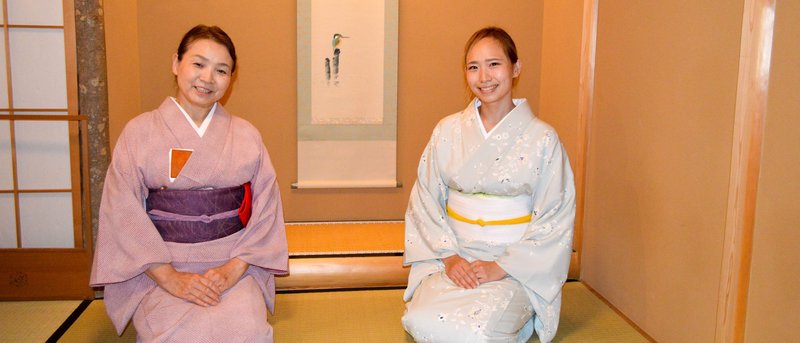
A real tearoom: A room laid with tatami, the woven straw mats of a traditional Japanese room, often with a tokonoma alcove showing a scroll or seasonal flowers.
A host who explains what they are doing: Why each utensil is used and what the season brings to the room.
A link to a school of tea: Such as Urasenke, so the movements follow a tradition rather than a script.
Time to whisk your own bowl: Not only watching.
What happens, step by step
While venues differ slightly, a typical session follows this order, based on Alva Japan Tours' private tea ceremony in Asakusa:
Arrival: Bags and items not allowed in the tearoom are left outside.
Purification: You rinse your hands at a stone basin called a tsukubai.
Entering: You bow through a low entrance called a nijiriguchi, which is meant to make every guest equal.
Looking: The host introduces the hanging scroll and seasonal flowers in the alcove, and the tea utensils.
Sweets first: A wagashi, a traditional Japanese confection, is served first to balance the slight bitterness of the tea.
The first bowl: You watch the host prepare matcha, then drink it.
Your turn: You whisk your own bowl, drink it, and ask questions.
Wearing kimono for a tea ceremony
A kimono is Japan's traditional robe, wrapped around the body and tied with a wide sash called an obi. A yukata is a casual cotton summer version worn without the long under-kimono. A kimono is more formal, so it is the more fitting choice for a tea ceremony.
How long does dressing take?
The staff will dress you, so no prior knowledge of kimono is required. At Waraku, a rental chain with a shop in Asakusa, kimono dressing takes about 15 minutes, with hair styling taking about another 15. However, the shop recommends allowing around an hour in total, including time to choose your kimono. Most shops set a last dressing time in the afternoon, along with a same-day return time. At Waraku Asakusa, dressing ends at 4:00 p.m. and kimono must be returned by 5:30 p.m. Book your tea ceremony for the morning or early afternoon so you are not rushing.
What is provided and what to bring
A full rental set usually includes the kimono, obi, under-kimono, tabi split-toe socks, zori sandals, and a small bag. Waraku's Asakusa plans for one adult cost ¥3,850 including tax, with hair styling included in the women's plans. You need to bring very little: wear thin clothes you can keep on underneath, and in winter a warm inner layer, which Waraku recommends.
Sizing
Waraku offers kimono for women from about 145 cm to 175 cm (4'9" to 5'9") and for men from about 155 cm to 195 cm (5'1" to 6'3"). If you are taller, or need large sandals, contact the shop before you book.
Sitting in seiza
Seiza is the formal way of sitting on the floor, kneeling with your legs folded under you. It is the posture you will see in the tearoom, and in a kimono, it can begin to feel tight after a few minutes. You don't have to stay in this position the whole time. Alva's Urasenke session states that guests are not required to remain in seiza for the full session, and if you can't kneel or sit on the floor, please tell the venue in advance.
Etiquette basics
Hosts guide beginners through every step, but these basics from Urasenke's beginner guide help:
Before you drink: Bow and say thank you for the tea.
Hold the bowl: Rest it on your left palm and support it with your right hand.
Turn the bowl: Turn it toward you twice with your right hand, so you don't drink from its front, the side with the main decoration.
After drinking: Wipe the rim with your thumb and finger, clean your fingers on kaishi, the folded paper guests carry, and turn the bowl back.
In the room: Avoid strong perfume, remove hats, and wear socks on the tatami if you are not in kimono.
Taking photos
The tearoom is a quiet space, so ask before taking photos. On Alva's Urasenke session, photos are allowed at times the instructor approves. Since rentals run until late afternoon, you can take more pictures in kimono around Asakusa afterward.
How to book a kimono and tea ceremony in Tokyo
There are two ways to do it.
1. A venue that includes kimono
Some venues combine dressing and tea in one booking. For example, MAIKOYA in Asakusa includes kimono selection, dressing, and rental until 6:00 p.m. with an English-guided tea ceremony; it takes about 90 minutes including dressing, and the price varies by date. This is the simplest option if you want one booking.
2. A tea ceremony plus a separate kimono rental
If the tearoom and host matter most, choose the tea ceremony first and rent a kimono nearby. Alva Japan Tours' tea experiences don't include kimono rental, so combine them this way:
Private Tea Ceremony in Asakusa with Matcha & Wagashi: 1 hour, from ¥11,000 per adult, held in Kojitsuan, a four-and-a-half-tatami tearoom inside a tea-utensil shop in Asakusa. Includes a seasonal sweet, a bowl of matcha prepared by the host, and a bowl you whisk yourself. Asakusa has many kimono rental shops, which makes it the easiest place to combine the two.
Private Urasenke Tea Ceremony with Matcha & Wagashi in Tokyo: 1 hour, from ¥14,000 per person, in Shinjuku. According to the tour page, the instructor holds the Urasenke Jun-Kyoju qualification and a master's degree in traditional arts. Includes guest etiquette, a tea preparation demonstration, a seasonal sweet, and whisking your own matcha. Rated 4.8 from 23 reviews.
Private Zen Meditation with a Monk & Matcha in Tokyo: 1 hour 30 minutes, from ¥16,000 per adult, at Yougakuji, a Rinzai Zen temple in Fukagawa. A monk-led meditation session that finishes with matcha and a Japanese sweet. It is not a full tea ceremony, but it shows the Zen side of tea culture. Rated 5.0.
For a full day, the Full-Day Zen Meditation, Tea Ceremony & Calligraphy Retreat in Tokyo combines all three in 8 hours, from ¥60,000 per adult. You can browse every option on our tea ceremony page.
Which option fits your trip?
You want one simple booking with kimono: A venue that includes dressing.
You want a real tearoom and time with the host: A private tea ceremony, plus a kimono from a nearby rental shop.
You want to understand the tradition more deeply: The Urasenke session.
You want quiet and reflection: Zen meditation with matcha.
Frequently asked questions
Do I have to wear kimono for a tea ceremony?
No. Casual, modest clothes that let you sit on the floor are fine, and socks are recommended on tatami.
Can men wear kimono too?
Yes. Rental shops offer men's kimono, and Waraku Asakusa has a men's plan at the same price as its standard women's plan.