Last updated: October 2026.
Tokyo hosts a Grand Sumo tournament only in January, May, and September, each for 15 days. That means for most of the year there is no tournament in the city, and many visitors assume they have missed their chance to see sumo. You haven't. This guide covers every realistic way to watch sumo wrestling when no tournament is running, and which one fits your trip.
When are sumo tournaments held?
There are six Grand Sumo tournaments a year. Three are held in Tokyo at the Ryogoku Kokugikan, the national sumo stadium. The other three are held in major cities elsewhere in Japan. Here is where each tournament takes place:
January: Tokyo
March: Osaka
May: Tokyo
July: Nagoya
September: Tokyo
November: Fukuoka
In 2027, the Tokyo tournaments run January 10 to 24, May 9 to 23, and September 12 to 26. If your trip falls outside those dates, try one of the options below.
1. Join a sumo show and workshop
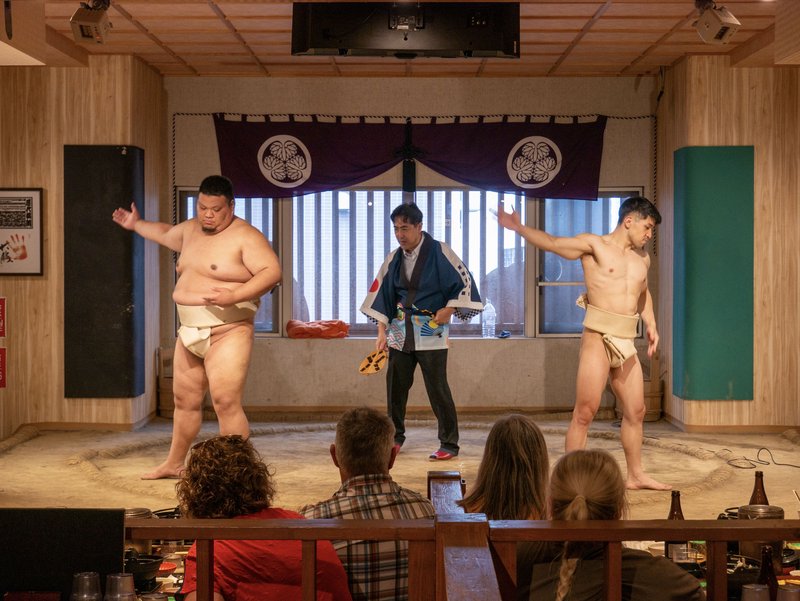
The most reliable option, because it runs year-round and doesn't depend on any schedule. At a sumo show, former professional wrestlers demonstrate real sumo up close and explain what you are watching, then you can try basic moves on a real ring yourself.
Alva Japan Tours runs the Ryogoku Sumo Show & Workshop with Chanko Lunch in Ryogoku, Tokyo's sumo neighborhood: 2 hours, from ¥13,000 per person, with an optional ring challenge and a chanko hot pot lunch, the meal sumo wrestlers eat. It is rated 4.9 out of 5 by over 500 guests and works well for families.
2. Watch morning practice at a sumo stable
Between tournaments, wrestlers train every morning at their stables, the communal homes where wrestlers live and train together. Watching a practice session is the closest you can get to real professional sumo outside a tournament. Most stables don't accept walk-in visitors, so you either watch from the street at Arashio stable in Nihonbashi, which has public viewing windows, or join a guided visit. Our guide to watching sumo morning practice explains how it works and the etiquette to follow.
One thing to know: stables leave Tokyo for the March, July, and November tournaments, so there is little or no stable practice in Tokyo in those months and the weeks before them. The best windows are the weeks before the Tokyo tournaments.
For a private visit with a guide, see Private Sumo Morning Practice & Ring Experience: ¥38,000 per person to watch, or ¥52,000 with a ring experience, 1 hour 30 minutes.
3. Visit the Sumo Museum at the Ryogoku Kokugikan
The free Sumo Museum on the first floor of the Kokugikan is open on weekdays from 10:00 to 16:30 outside tournament periods, and it is closed as a rule on weekends and holidays. It is a short visit, but it gets you inside the national sumo stadium and shows sumo's history through rotating exhibitions. See our Ryogoku Kokugikan guide for details.
4. Catch a regional tour (jungyo)
Between tournaments, top wrestlers travel around Japan on regional tours called jungyo. A tour day usually includes morning practice, exhibition bouts, and demonstrations you won't see at a tournament. Most stops are outside central Tokyo. In 2026, the spring tour included a ceremonial tournament at Yasukuni Shrine in central Tokyo in April. It also stopped in Adachi Ward in northeast Tokyo, Ota Ward in south Tokyo, and Fuchu in western Tokyo. The summer tour stopped in Tachikawa, also in western Tokyo, in late August. The Japan Sumo Association publishes each year's schedule on its English site.
5. Travel to a tournament in another city
If watching a full tournament matters most, check whether your trip overlaps with Osaka (March), Nagoya (July), or Fukuoka (November). All three are easily accessible from Tokyo by shinkansen, and tickets are sold on the same official site, Ticket Oosumo. Our sumo tickets guide explains how buying works.
Which option is right for you?
You want a guaranteed sumo experience on a fixed date: A sumo show and workshop.
You want to see real professional training: Morning practice, if your dates are not during an away tournament.
You have an hour free on a weekday in Ryogoku: The Sumo Museum.
You are traveling around Japan: Check the regional tour schedule and the tournaments in Osaka, Nagoya, and Fukuoka.
For every way to experience sumo in the city, see our complete guide to sumo in Tokyo.
Frequently asked questions
Is there any sumo in Tokyo in November?
There is no tournament in Tokyo in November, and most stables are in Fukuoka for the November tournament, so stable practice in Tokyo is limited. A sumo show and workshop is the best option that month.
Can I see sumo in Tokyo in summer?
July is the Nagoya tournament, so stables are away for much of that month. From August, wrestlers return, and the weeks before the September Tokyo tournament are a good time for morning practice. Sumo shows run all summer.
Do I need to speak Japanese to enjoy these?
No. Sumo shows and guided practice visits are run with English explanations. The Sumo Museum has limited English, so it helps to read up before you go.