
Last updated: October 2026.
Watching sumo wrestlers train up close is one of the most memorable things you can do in Tokyo, and unlike a tournament, it doesn't depend on a ticket sale. Morning practice, called asa-geiko, happens inside sumo stables (heya), the communal homes where wrestlers live and train together. This guide explains how stable visits work, where you can watch, important etiquette, and the times of year when there is no practice in Tokyo.
What is sumo morning practice?
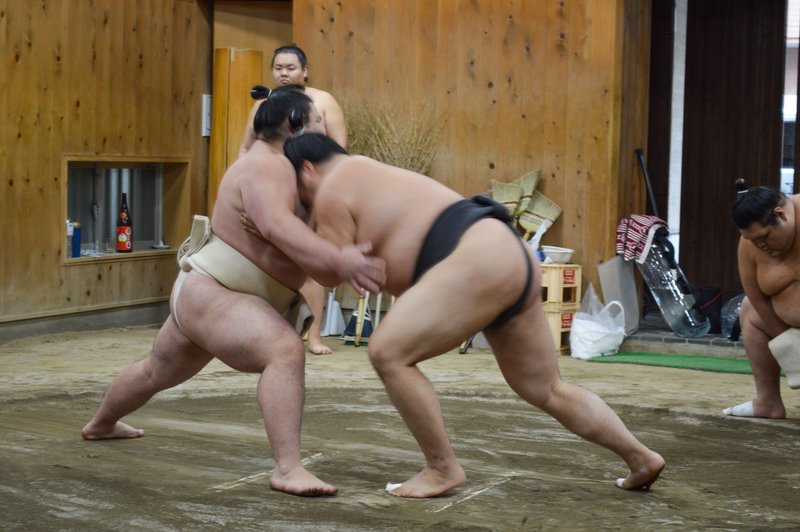
Professional sumo wrestlers train every morning at their stable, on a practice ring inside the building. Practice starts early, typically around 7 to 8 a.m., and runs for a couple of hours. You will see the same drills used in the Ryogoku Sumo Show and Workshop, such as leg stomping (shiko) and pushing practice, followed by real practice bouts between wrestlers. It is quiet, intense, and very different from the ceremony of a tournament.
Can you just walk into a sumo stable?
No. Stables are private homes and training spaces, not tourist venues. Most don't accept walk-in visitors, some don't accept visitors at all, and rules vary from stable to stable. Tour operators also report that some stables have stopped allowing public viewing after visitors broke the rules. There are three realistic ways to watch:
Watch from the street at Arashio stable: Arashio stable in Nihonbashi-Hamacho has street-facing windows where anyone can watch practice for free, without a reservation. Practice starts at 7:30 a.m. on practice days. The stable publishes a practice calendar on its website and does not answer schedule questions by phone or email, so check the calendar before you go.
Join a guided stable visit: A guide arranges entry with a stable in advance, explains what you are seeing, and makes sure the group follows the stable's rules. This is the only way most visitors can watch from inside a practice room.
Watch practice on a regional tour (jungyo): When wrestlers tour regional cities between tournaments, their morning practice at the venue is part of the day. Most stops are outside central Tokyo, so this suits travelers who are already visiting those cities.
When is there no morning practice in Tokyo?
This is the part most visitors miss. Tokyo stables leave the city for the three tournaments held elsewhere: Osaka in March, Nagoya in July, and Fukuoka in November. They move to the host city a few weeks before each tournament, so there is no stable practice in Tokyo during those periods. Arashio stable, for example, notes that it has left for Fukuoka and there will be no practice in Tokyo until December. Practice also pauses during Tokyo tournaments and usually for a short rest right after any tournament.
As a rough guide, the best chances to see morning practice in Tokyo are in the weeks before the January, May, and September Tokyo tournaments, and in the gaps between tournaments. Always check the stable's or tour operator's schedule for your exact dates.
Sumo stable etiquette
Stables allow visitors to watch as a courtesy, and following the rules is what keeps them open to the public. Arashio stable lists these rules for people watching from the street:
Stay quiet.
No flash photography.
No eating or drinking.
Don't sit on the neighbors' steps.
Inside a stable, expect a few more: you usually sit on the floor, you shouldn't talk to the wrestlers or move around during practice, and whether you can take photos is up to the stable. If your guide tells you to stop filming, stop.
Watching morning practice with Alva Japan Tours
Private Sumo Morning Practice & Ring Experience is a private visit to watch sumo wrestlers' morning practice in Ryogoku, with a guide explaining the practice as it happens. Watching costs ¥38,000 per person, or ¥52,000 if you also want to step into the ring, learn basic movements from an instructor, and try a safe push practice. The visit takes 1 hour 30 minutes.
If your dates fall when stables are away from Tokyo, or you would rather try sumo yourself than watch, the Ryogoku Sumo Show & Workshop with Chanko Lunch runs year-round: former professional wrestlers demonstrate real sumo and teach basic moves, from ¥13,000 per person.
For other ways to see sumo outside tournaments, read how to watch sumo when there is no tournament, or start with our complete guide to sumo in Tokyo.
Frequently asked questions
Is watching sumo morning practice free?
Watching from the street at Arashio stable is free. Visits inside a stable are usually arranged through a guide or tour operator, which is paid.
What time should I arrive?
Practice usually starts between 7 and 8 a.m. At Arashio stable it starts at 7:30 a.m. Arrive a little early, because the most active part of practice is often in the first hour.
Can children watch sumo practice?
Yes, as long as they can stay quiet and still for the length of the visit. Some guided visits set a minimum age, so check before booking. For younger kids, a sumo workshop where they can take part is usually a better fit.