
Last updated: October 2026.
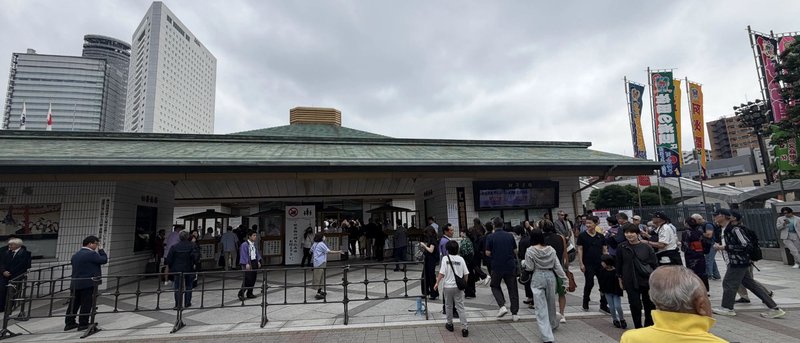
The Ryogoku Kokugikan is Japan's national sumo stadium, the arena in Tokyo's Ryogoku district where three of the six annual Grand Sumo tournaments are held. If you want to watch professional sumo wrestling in Tokyo, this is where it happens. This guide explains what the Kokugikan is, how to get there, how the seats work, and what you can still see and do there when no tournament is running.
What is the Ryogoku Kokugikan?
Kokugikan means "hall of the national sport", and the building is run by the Japan Sumo Association. It holds 11,098 people. Its seating can be rearranged, so outside tournaments it also hosts a wide variety of other events, such as concerts and shows. The Ryogoku neighborhood around it has been the center of Tokyo sumo for generations, and many sumo stables, where wrestlers live and train together, are located nearby.
When are sumo tournaments held at the Kokugikan?
Tokyo hosts three Grand Sumo tournaments (honbasho) every year, in January, May, and September. Each tournament runs for 15 days, with lower-ranked wrestlers competing from the morning and the top-division wrestlers in the late afternoon. Exact dates are announced by the Japan Sumo Association, so check the official schedule before you plan your trip. If your dates fall outside these months, see "Visiting when there is no tournament" below.
How to get to the Ryogoku Kokugikan
JR Sobu Line, Ryogoku Station: About a 1-minute walk. This is the easiest route, and the stadium is right next to the station.
Toei Oedo Line, Ryogoku Station: About a 5-minute walk.
The Japan Sumo Association puts the Kokugikan about 10 minutes from Tokyo Station or Ueno Station, and about 17 minutes from Shinjuku Station by train. The address is 1-3-28 Yokoami, Sumida-ku, Tokyo.
Seats at the Kokugikan: which one should you choose?
There are three main seat options at a sumo tournament. Which one suits you depends on your budget and how comfortable you are sitting on the floor.
Masu seats (box seats): Japanese-style boxes on the first floor where you sit on cushions on the floor. A standard box is sold as a whole and seats about four people, so it works best for a group. For the January 2026 tournament, boxes sold on the English ticket site cost ¥34,000 to ¥52,000 for four, depending on the grade and the day.
Chair seats (arena seats): Regular stadium seats on the upper level, like at any sports venue. They are the easiest choice for solo travelers or anyone who prefers not to sit on the floor, at ¥3,500 to ¥9,500 per seat for the January 2026 tournament.
Tamari seats (ringside): Cushions right around the ring, the closest you can get to the wrestlers. They cost ¥20,000 per person and are sold only on the Japanese ticket site.
Tickets go on sale through the official "Ticket Oosumo" site, which has an English version. Popular days, especially weekends and the final days of a tournament, can sell out quickly, so it is worth checking the release date for your tournament early. Our guide to buying sumo tickets in Tokyo walks through the process step by step.
The Sumo Museum inside the Kokugikan
On the first floor of the Kokugikan is the Sumo Museum, run by the Japan Sumo Association. It shows sumo history through rotating exhibitions, such as woodblock prints, banzuke ranking sheets, and items from famous wrestlers.
Admission: Free.
Hours: 10:00 to 16:30 (last entry 16:00). During Tokyo tournaments it opens 12:30 to 16:00, and you need a tournament ticket to enter.
Closed: As a rule on Saturdays, Sundays, and national holidays, plus the year-end and New Year holidays and during exhibition changes. Some weekend days are open, so check the museum's calendar before you go.
Because it is free and open on most weekdays, the museum is the easiest way to step inside the Kokugikan when there is no tournament.
Visiting when there is no tournament
Most of the year there is no sumo tournament in Tokyo, but Ryogoku is still the best place in the city to experience sumo. Besides the Sumo Museum, you can:
Watch a sumo stable's morning practice. Stables near Ryogoku hold practice early in the morning, and some can be visited with a guide.
Join a sumo show and workshop. Former professional wrestlers demonstrate real sumo and teach basic moves, often with a chanko hot pot lunch, the meal wrestlers eat.
Alva Japan Tours runs both in Ryogoku:
Ryogoku Sumo Show & Workshop with Chanko Lunch: from ¥13,000 per person, 2 hours. Former pro wrestlers, basic moves on a real ring, an optional ring challenge, and chanko lunch. Rated 4.9 out of 5 by over 500 guests.
Private Sumo Morning Practice & Ring Experience: ¥38,000 per person to watch morning practice privately, or ¥52,000 with a ring experience, 1 hour 30 minutes.
For a full overview of every way to see sumo in Tokyo, read our complete guide to sumo in Tokyo.
Frequently asked questions
Can I visit the Ryogoku Kokugikan without a ticket?
On days without events, you can visit the Sumo Museum on the first floor for free during its open hours. During a Tokyo tournament, you need a tournament ticket to enter the building, including the museum.
How long should I plan for a day at a sumo tournament?
Matches run from the morning until around 6 p.m., and the top-division bouts start around 2 p.m. A ticket covers the whole day, so many visitors arrive in the early afternoon. Plan at least three to four hours if you want to see the top wrestlers.
Is the Kokugikan good for families with kids?
Yes, but consider the best seating option for your family before your visit. Chair seats are easier for small children than sitting on the floor in a box seat, and the free Sumo Museum is a short, easy visit. On days without a tournament, a hands-on sumo workshop is often more engaging for kids than watching.