
Last updated: November 2026.
Planning family activities in Tokyo gets harder when your group spans toddlers, teenagers, and grandparents. One child is too young for a workshop. A grandparent cannot kneel on tatami. Someone needs a toilet that the venue does not have. This guide from Alva Japan Tours lists hands-on experiences with their real child prices and age rules, then covers strollers, trains, rest stops, and a few free places that work for every age.
What to check before you book
Age bands. "Child" means something different at each venue. In this guide it ranges from ages 2–5 to ages 2–12, and some workshops have no child price at all.
Minimum age. Some crafts set a minimum age for safety, even if younger children have a price band.
Sitting and kneeling. Traditional rooms use tatami, a woven straw floor mat. Ask in advance if anyone cannot kneel or sit on the floor.
Length. Every experience below runs 1 to 2 hours. That leaves room for a nap or a slow lunch.
Family-friendly experiences with child prices and minimum ages
Sumo show and workshop in Ryogoku (ages 0 and up)
Ryogoku is Tokyo's sumo district in east Tokyo, about 10 minutes from Tokyo Station by train. At the Ryogoku Sumo Show & Workshop with Chanko Lunch, former professional sumo wrestlers demonstrate techniques and an exhibition match a few meters away. A host explains the rules in English or Japanese. Then anyone who wants to can try shiko, the leg-raising stomp, and suri-ashi, the sliding footwork. Selected volunteers can take on a friendly challenge with a former wrestler. Everything ends with chanko, the hot pot wrestlers eat.
Price: ¥13,000 for ages 6 and up, ¥9,000 for children aged 2 to 5, free for ages 0 to 1.
Length: 2 hours, including lunch.
Good for grandparents: Joining in is optional. Guests can stay seated, cheer, and film. The page lists the venue as wheelchair and stroller accessible.
Rating: 4.9 from 509 reviews (as of November 2026).
It is an exhibition, not an official tournament. That makes it a useful option when no tournament is running. See our sumo show guide for more detail.
Private tea ceremony in Asakusa (child price from age 4)
Asakusa is the old temple district in northeast Tokyo. The Private Tea Ceremony in Asakusa with Matcha & Wagashi takes place in a small tearoom inside a tea-utensil shop. Your family purifies their hands at a stone basin, crawls through a low tearoom door, eats a seasonal sweet called wagashi, and whisks a bowl of matcha.
Price: ¥11,000 for ages 12 and up, ¥9,000 for ages 4 to 11, free for ages 0 to 3.
Length: 1 hour, private for your group.
Note for older guests: The standard session includes crouching and a low entrance. Tell the team before booking if anyone cannot kneel or use it.
Chopstick making in Shibuya (ages 3 and up)
The Chopstick Making Workshop at Shibuya Scramble Square is held at Hyozaemon, a chopstick maker with roots going back to 1921. The shop is on the 14th floor of Shibuya Scramble Square, a tower directly connected to Shibuya Station. You learn how to hold chopsticks, then personalize a pair to take home.
Price: ¥7,500 per person from age 3. There is no separate child price. Ages 0 to 2 are free.
Length: 1 hour, up to 3 guests per session, so check availability if your family is larger.
Access: Listed as wheelchair and stroller accessible. Rated 5.0 from 38 reviews.
Food replica workshop in Kappabashi (ages 9 and up)
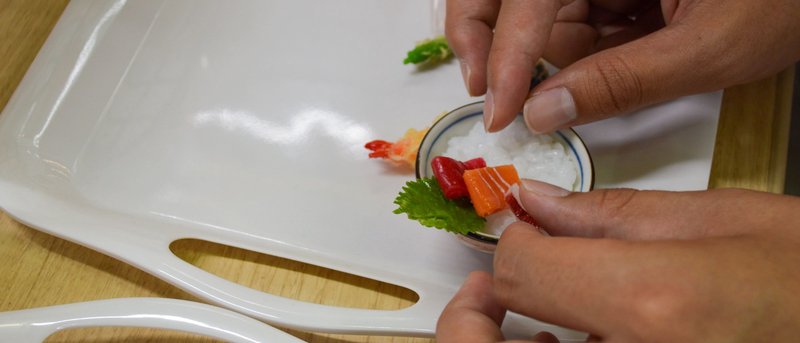
Japanese restaurants display realistic plastic models of their dishes, called food replicas. At the Mini Food Replica Rice Bowl Workshop in Kappabashi, you assemble a miniature rice bowl from professional replica parts at Sato Sample, a maker founded in 1925. Kappabashi is Tokyo's kitchenware street, next to Asakusa.
Minimum age: 9. Participants of junior-high-school age or younger must come with a parent or guardian.
Price: ¥5,500 for ages 12 and up, ¥4,500 for ages 9 to 11. Materials are paid at the shop. The basic set starts at ¥2,200, and toppings cost extra.
Before you go: The shop has no customer toilet. Plan a restroom stop first. Rated 5.0 from 11 reviews.
Calligraphy in Roppongi (child price from age 3)
Calligraphy, or shodo, is the art of writing characters with brush and ink. Ancient Script Japanese Calligraphy with a PhD Calligrapher in Tokyo is taught by Fugaku Watanabe, who holds a doctorate in Calligraphy Studies, at his studio in Roppongi in central Tokyo. Each person takes home a piece on a square art board or a paper fan.
Price: ¥10,000 for ages 12 and up, ¥8,000 for ages 3 to 11, free for ages 0 to 2.
Length: 1 hour. Listed as stroller accessible. Ink stains, so dress kids in casual clothes.
Private sushi class near Asakusa (child price ages 2 to 12)
At the Private Sushi Making Class with Tempura near Asakusa, your family shapes nigiri sushi inside a working sushi restaurant, then eats it with an included tempura dish.
Price: ¥11,000 for ages 13 and up, ¥9,000 for ages 2 to 12, free for ages 0 to 1.
Length: 1 hour 30 minutes, minimum 4 guests. Listed as wheelchair and stroller accessible.
Food note: Raw fish and shellfish may be included. Tell the team about allergies before booking.
For teens: manga drawing in Nakano (ages 6 and up)
Teenagers who love anime often prefer the Manga Drawing Workshop in Nakano. It runs at Manga School Nakano, which has taught manga in English since 2013. Students sketch a character, ink it with manga pens, add screentone shading, and take the artwork home. It costs ¥16,000 from age 6 and lasts 2 hours. It is rated 5.0 from 73 reviews. The page lists it as not wheelchair or stroller accessible.
Practical tips for a family day in Tokyo
Train fares for kids. On Tokyo Metro, ages 6 to 11 pay a child fare, about half the adult fare. Up to two children aged 1 to 6 ride free with a paying passenger. Babies under 1 ride free.
Strollers on trains. Use station elevators, and avoid the weekday morning and evening rush, when cars are packed.
Plan rest stops. Book one experience in the morning and one after lunch, not back to back. A one-hour workshop plus a long lunch suits most grandparents.
Pair nearby stops. Kappabashi and the sushi class are both near Asakusa. The chopstick workshop sits above Shibuya Station.
Check the cancellation window. All the experiences above offer a full refund if you cancel at least 24 hours before the start.
Free family stops to add
Sumo Museum, Ryogoku. A small museum on the first floor of the Ryogoku Kokugikan, the national sumo stadium. Admission is free. It opens 10:00 to 16:30 on weekdays and is closed most weekends and holidays. During Tokyo tournaments it opens 12:30 to 16:00 and requires a tournament ticket. It pairs well with the sumo show.
Tokyo Metropolitan Government Building observation decks, Shinjuku. Two free decks on the 45th floor of Tokyo's city hall. The South deck opens 9:30 to 22:00 and the North deck 9:30 to 17:30. Each closes on two set days a month, so check the calendar.
Senso-ji, Asakusa. Asakusa's landmark Buddhist temple, in the same district as the tea ceremony. The main hall opens 6:00 to 17:00, or from 6:30 from October to March.
For more ideas, see our guide to cultural experiences in Tokyo and our complete guide to sumo in Tokyo.
Frequently asked questions
What is a good family activity in Tokyo for young children?
The sumo show and workshop accepts all ages, with a child price for ages 2 to 5 and free entry for babies. Joining in is optional, so toddlers can simply watch.
Which Tokyo workshops work for grandparents?
Choose seated, one-hour sessions such as calligraphy or chopstick making. For the tea ceremony, ask in advance about kneeling and the low entrance.
Do children need their own ticket?
Usually yes. Most experiences above charge a child price from age 2, 3, or 4. The chopstick and manga workshops charge one price from age 3 and age 6.