
Last updated: November 2026.
Tokyo changes after dark. Office workers fill tiny bars, lanterns light up narrow alleys, and the skyline turns into a sea of lights. This guide covers the things to do in Tokyo at night with real prices and times, from city views and izakaya alleys to night tours, bathhouses, and getting home safely.
How to plan a night in Tokyo
Most Tokyo evenings follow the same rhythm. Locals catch the sunset or a view, eat and drink from around 6 or 7 p.m., then move on to a second spot. Plan your night around three points:
Start with a view. Observation decks are busiest at sunset. Arriving just after dark is usually calmer.
Pick one or two districts. Shinjuku and Shibuya are a few stops apart on the JR Yamanote Line, the loop line around central Tokyo.
Know your last train. According to GO TOKYO, the city's official travel site, public transport runs until around midnight. After that, you will need a taxi.
See Tokyo's lights from above
A night view is the easiest way to start an evening. Here are three options at different price points:
Tokyo Metropolitan Government Building: The city government's twin towers in west Shinjuku, a short walk from Shinjuku Station. The observation decks on the 45th floor are free to enter. GO TOKYO also notes that the building's walls host projection mapping throughout the year.
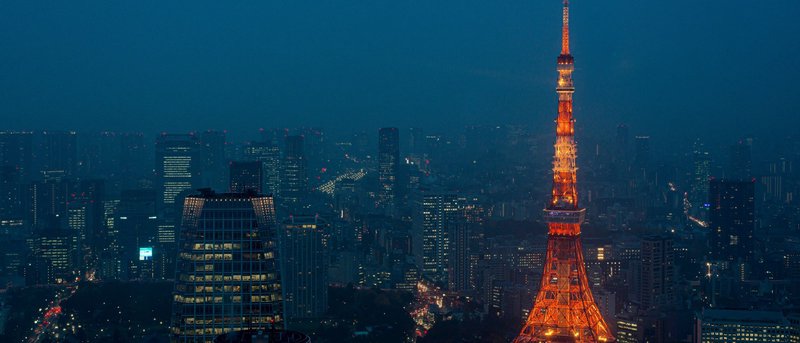
Tokyo Tower: The red-and-white tower in Minato ward, south of the Imperial Palace. The Main Deck at 150 meters is open 9:00 to 23:00, with last entry at 22:30. Adult tickets cost ¥1,500. The Top Deck Tour, which adds the 250-meter deck, costs ¥3,300 online or ¥3,500 at the counter for adults.
SHIBUYA SKY: The open-air rooftop deck on top of Shibuya Scramble Square, directly above Shibuya Station. It looks straight down on the famous crossing. The rooftop can close in rain or strong wind, and the indoor deck may stay open.
Eat and drink at an izakaya or yokocho
An izakaya is a Japanese pub where you order small plates to share with your drinks. A yokocho is an alley or lane packed with tiny bars and eateries. Both are where Tokyo locals actually spend their evenings. A few customs help first-time visitors:
Otoshi: A small appetizer some places serve automatically. It works like a table charge and appears on your bill.
Table and cover charges: Many small bars add a seat charge. It is normal, not a scam, but ask first if no price is shown.
Cash: Many small alley bars still prefer cash, so carry some yen.
Tachinomi: A standing bar. You eat and drink on your feet, usually for a shorter stay.
Shibuya has a modern take on the alley format. Shibuya Yokocho, on the ground floor of RAYARD MIYASHITA PARK, a short walk from Shibuya Station, gathers restaurants serving regional dishes from across Japan under colorful lanterns.
Walk two of Tokyo's nightlife districts
Shinjuku is the classic first night out. It is west of central Tokyo, around 15 minutes from Tokyo Station on the JR Chuo Line. Three areas sit within walking distance of each other. Omoide Yokocho is a post-war alley with around 60 small eateries known for yakitori, grilled chicken skewers. Kabukicho is the neon entertainment district, home to the giant Godzilla Head on the Shinjuku Toho Building. Golden Gai is a few blocks of low-rise buildings with around 280 tiny bars and eateries. Many seat only a handful of guests.
An insider's note: the Golden Gai alleys are private roads managed by local shopping associations, and their guidance requires permission for photography. Enjoy the atmosphere, and keep your camera down in the lanes.
Shibuya, a few minutes south of Shinjuku by train, is younger and louder. Beyond the Scramble Crossing, the side streets of Center-gai and Udagawacho mix small bars, music venues, and record shops with new towers.
For a quieter evening, Asakusa in east Tokyo is worth a look. The main hall of Senso-ji, Tokyo's oldest temple, closes at 5 p.m., but the temple buildings are lit up after dark and the streets are calm.
Join a guided night tour
A local guide explains which bars welcome visitors, what the charges mean, and what to order from a Japanese-only menu. Alva Japan Tours runs these evening experiences in Tokyo (prices and ratings as of November 2026):
Private Shinjuku Night Tour: Golden Gai, Izakaya Dinner & Drinks: Price: ¥17,000 per adult. Length: 3 hours. A private walk through Omoide Yokocho, Kabukicho, and Golden Gai, then a six-dish izakaya dinner with a time-limited free-flow drink plan. Your guide stays with you through dinner. Rated 5.0 by 13 guests.
Shibuya After Dark Night Walk with SHIBUYA SKY Entry: Price: ¥14,000 per person (children 5 and under free). Length: 2 hours. A walk from the Hachiko Statue across the Scramble Crossing and through Center-gai, ending with timed entry to SHIBUYA SKY. Rated 4.9 by 315 guests.
Shibuya Izakaya & Yokocho Food Tour with Drinks: Price: ¥13,000 per person. Length: 2 hours. A private tour that starts at a standing bar and continues to Shibuya Yokocho for regional dishes. Selected drinks, seat charges, and otoshi are included. Rated 5.0 by 9 guests.
Shinjuku Sake Tasting & Japanese Food Pairing Dinner: Price: ¥13,500 per adult. Length: 2 hours. A guided tasting of four sakes with a Japanese course meal and a bilingual host, followed by the venue's time-limited free-flow menu. Rated 5.0 by 37 guests.
Private Shinjuku Night Portrait Photoshoot: Price: ¥15,000 per group of 1 to 4. Length: 1 hour. A local photographer guides you through neon streets and gives posing tips. You receive 30 to 50 edited photos.
Alcohol is served only to guests aged 20 and over in Japan, so bring photo ID. You can compare all evening options on our Tokyo nightlife tours page.
End the night at a sento
A sento is a neighborhood public bathhouse. It is different from an onsen, which uses natural hot-spring water. Sento are cheap and local. Since August 1, 2026, the standard adult price in Tokyo is ¥600, set by the Tokyo Sento Association. You wash at a shower station first, then soak, without a swimsuit, in a gender-separated bath. Phones and cameras are not allowed in changing rooms or bathing areas. Hours vary by bathhouse, so check before you go.
If the rules feel intimidating, the Tattoo-Friendly Local Sento Experience takes you to Atami-yu, a bathhouse built in 1954 in Kagurazaka, a neighborhood of narrow lanes in Shinjuku ward. Price: ¥7,000 per adult. Length: 1 hour. A guide explains every step before you enter, and admission, a small towel, and one post-bath drink are included. Tattoos are accepted under the current tour operation. Rated 5.0 by 17 guests.
For more traditional experiences, see our guide to authentic cultural experiences in Tokyo.
Safety and last-train tips
Tokyo is a comfortable city to explore at night, but nightlife districts have their own risks. The UK government's travel advice for Japan lists these points:
Do not follow street touts. Touts, called kyakuhiki, may approach you in English. The UK advice names Kabukicho, Roppongi, Shibuya, and Ikebukuro as areas Japanese police have flagged as higher risk.
See prices before you sit down. Check the menu prices before entering a bar, and confirm entry fees at clubs.
Watch your drink. The same advice reports more cases of drink spiking and card fraud in entertainment districts.
Plan your ride home. Trains stop around midnight. Check your last train before your second drink, or budget for a taxi.
Frequently asked questions
What are the top things to do in Tokyo at night?
See the city from an observation deck, eat at an izakaya or yokocho, walk Shinjuku or Shibuya after dark, and finish with a soak at a sento. A guided night tour combines several of these in one evening.
Is Tokyo safe at night?
Tokyo is generally comfortable to walk at night. In nightlife districts, ignore street touts, check prices before you sit down, and keep an eye on your drink.
What time do trains stop in Tokyo?
Public transport runs until around midnight, according to GO TOKYO. Check the exact last train for your line before you go out.