Last updated: November 2026.
Shinjuku is Tokyo's busiest station area, and it is at its most interesting after dark. Within a short walk of the station you can eat grilled skewers in a postwar alley, squeeze into a bar with only a handful of seats, and watch the city lights from 202 meters up for free. This guide from Alva Japan Tours focuses on the evening: what each area is, the local rules that confuse first-time visitors, and how to stay safe.
A sample Shinjuku evening
A relaxed order looks like this:
Early evening: A bath at a neighborhood sento, or night views from the Tokyo Metropolitan Government Building. Do the bath before you drink.
Dinner time: Grilled skewers in Omoide Yokocho, or a sit-down izakaya or sake pairing dinner.
Later: A walk through Kabukicho and one or two small bars in Golden Gai.
Omoide Yokocho: yakitori lanes by the west exit
Omoide Yokocho ("Memory Lane") is a block of narrow alleys right beside the west exit of Shinjuku Station. It began as a street-vendor market on burned-out land just after World War II. Today, according to its shopping association, about 60 eateries are packed into the lanes, most of them serving yakitori (grilled chicken skewers) and motsuyaki (grilled offal skewers).
Expect house rules. Many shops are cash only. Some have table charges, minimum orders, or time limits. Rules vary from shop to shop.
Use the proper name. You may see an old crude nickname for the area online. The shopping association asks media not to use it, so say "Omoide Yokocho."
Keep photos quick. The association requires advance permission for filming in the lanes and bans tripods and flash for shoots. Don't block the alley, and ask before you photograph staff or other diners.
Golden Gai: tiny bars with their own rules
Shinjuku Golden Gai is a grid of narrow lanes on the east side of the station, at the edge of Kabukicho. Around 280 small bars and eateries fill its low-rise buildings, and many seat only a handful of people. From the postwar years, it became a hangout for writers, filmmakers, and actors. Each bar still has its own owner, theme, and regulars.
Check the charge before you sit. Many bars add a cover or seating charge on top of drinks. Some post it on the door. If not, ask before you order.
Read the door. Some bars welcome first-time visitors and travelers. Others are for regulars only. A sign or an English menu at the door is a good hint.
Don't treat it as a photo set. The lanes are private roads managed by the local shopping association. Its official site says photographing or filming the area requires permission.
Kabukicho: what it is and how to stay safe
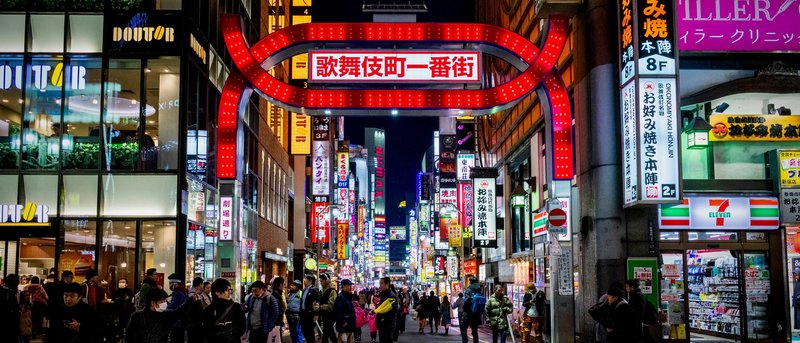
Kabukicho is Shinjuku's large entertainment district, just northeast of the station's east side. The giant Godzilla Head above the Shinjuku Toho Building is its most famous landmark and an easy photo stop from the street.
Most visitors walk through without trouble, but Tokyo's Metropolitan Police warn about one recurring scam. A street tout leads people to a bar, serves strong drinks, and then charges a huge bill or runs up the victim's credit card. Here is how to avoid it:
Never follow a tout. The police advice is simple: don't go with touts or anyone who tries to take you somewhere. Shinjuku City bans touting in Kabukicho and nearby areas, so anyone who stops you on the street to pull you into a bar is breaking a local rule.
Choose the place yourself. Pick bars you found before you went out, and check prices before ordering. Keep your drink and your card in sight.
Know the number. In an emergency, call 110 for the police.
Izakaya basics before you go
An izakaya is a Japanese pub where people share many small dishes over drinks. A few customs surprise first-time visitors:
Otoshi. A small starter often arrives without being ordered. It is usually billed as a per-person table charge.
Kanpai. Wait until everyone has a drink, then toast together with kanpai! before the first sip.
Free-flow plans have a clock. Nomihodai (all-you-can-drink) is time-limited, and only drinks on the plan's menu are included.
Drinking age is 20. Carry photo ID in case you are asked.
A sake pairing dinner in central Shinjuku
Nihonshu, the Japanese word for sake, is easier to enjoy once you know what you like. On Alva's Shinjuku Sake Tasting & Japanese Food Pairing Dinner, a bilingual guide takes you through four contrasting sakes alongside a Japanese course meal. You learn how food changes the taste of each pour. Afterward, you keep exploring on a time-limited free-flow menu. In the venue's standard plan, it includes around 20 sakes.
A neighborhood sento before dinner
A sento is a neighborhood public bath. Unlike an onsen, it does not use natural hot-spring water. Alva's Tattoo-Friendly Local Sento Experience takes you to Atami-yu. It is a bathhouse built in 1954 in Kagurazaka, an old hillside neighborhood in the east of Shinjuku City. The Tokyo Sento Association describes it as a traditional temple-style sento with a painted bath mural and water heated with firewood. Your guide explains every step before you go in, from washing first to keeping the small towel out of the water. You finish with one post-bath drink. Baths are separated by gender, and swimsuits are not worn. If your guide cannot use the same side, you bathe on your own after the briefing. Tattoos are accepted under the current tour operation.
An insider's tip: go to the bath first. The tour asks guests not to join while intoxicated, and a hot soak is a good way to start an evening of food.
Free night views from the Tokyo Metropolitan Government Building
The Tokyo Metropolitan Government Building, Tokyo's city hall, is in Nishi-Shinjuku, the skyscraper district west of the station. Its observatories sit on the 45th floor, 202 meters up, and entry is free. The South Observatory is usually open from 9:30 to 22:00, with last entry 30 minutes before closing. The North Observatory usually closes at 17:30, but it opens until 22:00 on the days the South Observatory is closed. Each observatory closes a few days a month, so check the official calendar before you go.
Outside, the building's east wall becomes a screen for TOKYO Night & Light, a free projection-mapping show. You watch it from the Citizens' Plaza in front of the building. From November to January, the shows start at 17:30. They run daily except in stormy weather.
See it all with a local guide
To enjoy the alleys, the history, and dinner without guessing at house rules, join one of Alva's Shinjuku evening experiences (prices as of November 2026):
Private Shinjuku Night Tour: Golden Gai, Izakaya Dinner & Drinks: Price: ¥17,000 per adult, ¥13,500 per child aged 2 to 17. Length: 3 hours. Private for 1 to 8 guests. You walk Omoide Yokocho, Kabukicho and the Godzilla Head, and Golden Gai with your guide. Then you sit down with your guide for a six-dish izakaya dinner with a time-limited free-flow drink plan. Rated 5.0 by 13 guests.
Shinjuku Sake Tasting & Japanese Food Pairing Dinner: Price: ¥13,500 per adult aged 20 and over. Length: 2 hours. Four guided sakes, a Japanese course meal, and time-limited free-flow drinks. Rated 5.0 by 37 guests.
Tattoo-Friendly Local Sento Experience: Price: ¥7,000 per adult aged 12 and over, ¥5,500 per child aged 6 to 11. Length: 1 hour. Etiquette briefing, bath entry, a small towel, and one post-bath drink. Rated 5.0 by 17 guests.
All three can be cancelled for a full refund up to 24 hours before the start. For more ideas, browse our Shinjuku experiences and Tokyo nightlife tours, or read our guide to authentic cultural experiences in Tokyo.
Frequently asked questions
Is Shinjuku safe at night?
Generally, yes, and the main streets stay busy late. The common risk is a tout leading you into an overpriced bar. Don't follow anyone who approaches you on the street, choose your own places, and check prices first.
Do I need cash in Golden Gai and Omoide Yokocho?
Bring some. Many small shops in Omoide Yokocho are cash only, and payment rules differ from bar to bar in Golden Gai.